
Nine casino Gates of Olympus
Introduction: What to Expect from Nine casino Gates of Olympus
When I look at Nine casino Gates of Olympus, I see a slot that has earned its visibility for a reason, but not always for the reasons casual players assume. Yes, it is flashy. Yes, it is often mentioned in slot discussions, streams, and bonus checklist buy conversations. But the real story sits deeper: this is a high-volatility video slot built around momentum swings, multiplier stacking, and a very specific emotional rhythm that can feel thrilling one session and brutally uneven the next.
For a player in Canada exploring Gates of Olympus at Nine casino, the key question is not whether the title is famous. The useful question is simpler: what does this slot actually do in real play, and what should I realistically expect from it? That is what I want to unpack here. I will focus on the slot itself—its structure, symbols, bonus round, pace, risk profile, and the practical difference between visual hype and actual gameplay value.
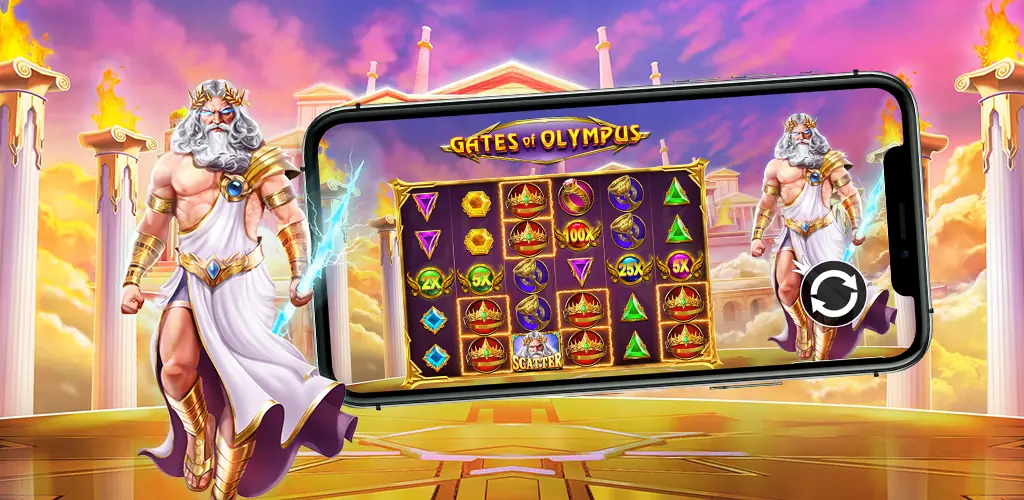
Gates of Olympus is developed by Pragmatic Play and is built on a 6x5 reel setup with scatter pays and tumble mechanics. Instead of relying on classic paylines, it pays when enough matching symbols land anywhere on the grid. That sounds straightforward, but the way the slot combines cascading wins with random multipliers is what gives it its identity. It can look generous because the screen is often active. In practice, though, activity is not the same as meaningful return. That distinction matters before any real-money session begins.
Why Gates of Olympus Stands Out in the First Place
There are many myth-themed slots on the market, and just as many titles built around free spins and large headline max win potential. Gates of Olympus still stands apart because it compresses several attention-grabbing ideas into one compact format: simple reel layout, no line complexity, frequent screen movement, and the constant possibility that a multiplier symbol can suddenly change the value of a spin.
The Zeus theme is not the main reason players stay with it. In fact, after a few sessions, most experienced users stop noticing the mythology and start reacting to the slot’s underlying logic. What keeps people engaged is the sense that every tumble can extend, and every extension can still be upgraded by a multiplier. That creates a strong illusion of “one more chance” on almost every active spin.
This is one of my main observations about the slot: Gates of Olympus feels more generous than it often is. The screen moves a lot, symbols disappear, new ones drop in, multipliers flash, and the round looks alive. But many of those sequences still end in modest returns or no meaningful recovery at all. The slot is excellent at producing anticipation. It is less consistent at converting that anticipation into stable value.
That tension is exactly why the title became so noticeable. It combines simplicity and volatility better than many competitors. New players understand it quickly. Experienced players recognize the upside. Streamers like it because it can produce dramatic moments. But none of that changes the core reality: this is a slot designed around uneven distribution, not smooth progression.
How the Core Gameplay Actually Works
At Nine casino, Gates of Olympus follows the standard Pragmatic Play format for this title: a 6-reel by 5-row grid with cluster-style scatter pays. There are no traditional paylines to track. To trigger a payout, you need a minimum number of matching symbols anywhere on the reels. Usually, 8 or more matching symbols create a return, depending on the symbol type.
Once a winning combination lands, those symbols disappear and new ones fall into place. This is the tumble feature, also called cascading reels. If the new drop creates another winning combination, the process continues within the same paid spin. In practical terms, this means one spin can contain several payout events chained together.
That sounds familiar because many modern slots use cascades. The difference here is how tightly the entire slot is built around them. In Gates of Olympus, the tumble is not just visual decoration. It is the engine that gives the multiplier mechanic room to matter. Without extra drops, multipliers would be far less impactful.
Here is the practical takeaway: single-hit expectations do not fit this slot well. Gates of Olympus tends to build value through sequences, not isolated symbol landings. If a spin dies immediately, it often feels empty. If it extends with two or three tumbles, the round can suddenly become relevant. This makes the slot feel streaky even before free spins are involved.
| Element | How it Works | Why it Matters in Real Play |
|---|---|---|
| 6x5 grid | No paylines, symbols can pay anywhere | Easy to read, but outcomes depend on symbol count rather than line position |
| Tumble feature | Winning symbols vanish and new ones fall | Creates chain potential and extends suspense within one spin |
| Scatter pays | 8+ matching symbols can trigger a payout | Removes line calculations and makes the slot more accessible |
| Random multipliers | Zeus can drop 2x to 500x multipliers | Can transform average tumbles into major hits, especially in free spins |
Symbols, Multipliers, and the Bonus Round Explained Clearly
The symbol set is straightforward. Premium symbols are represented by mythological items such as crowns, rings, chalices, and hourglasses, while low-value symbols are the familiar card ranks from 9 to A. A wild symbol substitutes for regular paying symbols to help complete combinations. The scatter symbol is the golden gate, and it is central because four or more scatters trigger the free spins round.
The multiplier symbol is where the slot earns its identity. Zeus can appear holding a multiplier orb with values ranging from 2x up to 500x. During the base game, if a multiplier lands but there is no winning combination on that same tumble sequence, it does nothing. If there is a winning sequence, all multipliers that appear during that sequence are added together and then applied to the total tumble payout.
That detail is critical. Multipliers do not always “save” a weak spin. They need a valid winning tumble chain to matter. This is one reason the slot can feel deceptive to inexperienced players. You may see a 50x or 100x multiplier appear and instinctively think something big happened, but if it lands on a dead sequence, it has zero value. Visually, it looks huge. Financially, it can mean nothing.
The free spins round starts with 15 spins after landing 4, 5, or 6 scatters. During this feature, multipliers become much more important because they are collected and added together across the session. If another multiplier lands later in the same bonus round, it stacks onto the existing total. The counter resets only when the feature ends.
This is the main source of the slot’s high-end potential. A bonus round does not need constant large symbol hits to become valuable. It needs enough connected tumbles for stacked multipliers to attach to. That creates a very specific emotional arc: many bonus rounds look quiet at first, then one later spin can suddenly absorb a large cumulative multiplier and change the whole result.
- 4+ scatters trigger 15 free spins.
- Multipliers in free spins are accumulated rather than used once and discarded.
- Retriggers are possible if 3 additional scatters land during the feature.
My second observation is this: the bonus round in Gates of Olympus is famous not because it is consistently rich, but because it can stay quiet for a long time and then explode in one spin. That pattern is extremely effective at keeping players engaged, but it also creates disappointment when the expected late surge never comes.
Volatility, RTP, and What the Risk Profile Means
Gates of Olympus is widely classified as a high-volatility slot. Depending on the version, the RTP is commonly listed around 96.50%, though exact figures can vary by casino ownership overview configuration. RTP is useful as a long-term mathematical reference, but for actual sessions it tells only part of the story. Volatility is the more important concept here because it shapes how the bankroll behaves over short and medium play.
High volatility means the slot may produce many low-value outcomes, long dry stretches, and irregular bonus performance, while reserving a larger share of theoretical return for occasional stronger hits. In plain terms, you should not expect steady balance support from this title. It is not built for smooth retention. It is built for spikes.
What does that mean in practice at Nine casino Gates of Olympus? When the support team feels slow, best Nine Casino iOS app page for Canadian players explains the fastest ways to reach them.
- Small and medium hits happen, but they often do not offset the cost of extended play.
- Bonus rounds can underperform badly, even after a lengthy wait.
- The slot’s best sessions are usually carried by one or two key moments, not by constant value.
- Bankroll swings can feel sharper than the simple interface suggests.
Players sometimes underestimate the risk because the game looks clean, bright, and easy to follow. That simplicity hides the aggression of the math model. Gates of Olympus is not complicated, but it is not gentle. If you prefer long sessions with frequent moderate returns, there are better choices. If you are comfortable with variance and you specifically enjoy chasing a high-impact bonus sequence, this slot makes more sense.
Game Pace, Session Flow, and the Reality of “Big Win” Potential
The tempo of Gates of Olympus is one of its strongest design choices. Spins resolve quickly, tumbles keep the screen active, and the multiplier mechanic creates recurring moments of tension. This makes the slot feel faster than many traditional reel games, even if the actual spin speed is comparable. The psychological speed is higher because every drop sequence suggests unfinished business.
That matters because faster-feeling slots can encourage longer sessions than intended. A player may not notice how many low-value spins have passed because the slot rarely looks static. Something is almost always happening. Again, visual motion and bankroll efficiency are not the same thing.
When players talk about “big win potential” in Gates of Olympus, they are usually referring to the slot’s maximum win ceiling and the possibility of stacked multipliers during free spins. This upside is real, but it should be framed correctly. The slot is capable of large outcomes, yet those outcomes sit deep in the tail of distribution. Most sessions will not come close to them.
I think the practical way to approach this slot is through session planning:
- Set a fixed stake relative to your bankroll, because volatility can punish overbetting quickly.
- Decide in advance whether you are chasing the bonus round or testing the base game rhythm, as the slot can drain balances while waiting for a strong feature.
- Use demo mode first if available, especially if you have only seen highlight clips and not normal session behavior.
My third observation is one that many players only learn after real play: Gates of Olympus often feels close to a breakthrough even when the math says nothing special is developing. That “almost there” sensation is part of the design. It is exciting, but it can also make discipline harder.
What Makes Gates of Olympus Different from Other Well-Known Slots
The easiest comparison is with other Pragmatic Play titles and other cascade-based slots that rely on free spins. Yet Gates of Olympus has a cleaner loop than many of them. It removes line complexity, reduces symbol-reading effort, and puts almost all emotional weight on two things: tumbles and multipliers.
Compared with classic free-spin slots, it feels more immediate. Compared with Megaways-style titles, it is less mechanically noisy. Compared with many hold-and-win formats, it is less about symbol locking and more about sequence building. That makes it accessible without becoming flat.
Its closest structural relatives are slots where random multipliers can appear during cascades, but Gates of Olympus is more memorable because the multiplier values can be dramatic and because the free spins round turns those values into a cumulative system. That accumulation model is a major differentiator. It gives the feature round a stronger sense of escalation than many competing slots offer.
At the same time, there is a trade-off. Some other popular slots distribute entertainment more evenly through side mechanics, mini-features, expanding reels, or alternative bonus paths. Gates of Olympus is narrower. It has fewer moving parts. If the tumbles do not connect and the multipliers do not attach to a useful sequence, the experience can feel repetitive faster than its reputation suggests.
| Comparison Point | Gates of Olympus | Many Other Popular Slots |
|---|---|---|
| Payout structure | Scatter pays on a 6x5 grid | Often paylines, ways-to-win, or Megaways systems |
| Main excitement driver | Random multipliers plus tumbles | Can include expanding symbols, side features, respins, pick bonuses |
| Bonus round identity | Multiplier accumulation across free spins | Often retriggers, sticky wilds, or reel modifiers |
| Session feel | Simple to follow, but highly swingy | Sometimes more layered, sometimes slower to read |
Strengths and Weak Spots in Real Gameplay
The strongest part of Gates of Olympus is clarity. You do not need ten sessions to understand what matters. The slot communicates its priorities immediately: connect symbols, extend tumbles, hope multipliers land at the right time, and aim for a bonus round where values can stack. That makes it easy to approach even for players who do not enjoy overly technical interfaces.
Another strength is tension density. Many slots need several different features to stay engaging. Gates of Olympus gets a lot of mileage from one core interaction. When it works, it creates memorable rounds without overcomplicating the screen. That economy of design is one reason the title remains relevant.
There is also genuine upside. The multiplier range is not cosmetic. In the right sequence, it can produce serious returns. This is important because some high-volatility slots advertise large potential but feel muted in actual bonus play. Gates of Olympus does at least give players a mechanic that can visibly change the result of a session.
The weak side is just as important. The base game can be thin for long stretches. Tumbles happen, but many are low impact. Bonus rounds can miss badly. Retriggers are exciting when they land, yet they are not frequent enough to be treated as part of a normal expectation. If a player needs regular reinforcement, this slot can become frustrating quickly.
Another limitation is repetition. Because the design is intentionally focused, there are fewer surprise layers than in more feature-rich titles. If you do not enjoy the core loop after twenty or thirty minutes, the slot is unlikely to reveal a hidden second personality later on.
Who This Slot Suits—and Who May Want a Different Style of Play
I would recommend Gates of Olympus primarily to players who understand variance and are comfortable with the idea that a session may be carried by a single bonus round or one unusually strong tumble chain. It suits users who enjoy momentum-based slots, who do not need constant medium returns, and who prefer simple rules with high upside over busy interfaces with many side features.
It can also appeal to players who like to analyze bonus behavior. The free spins round here is easy to read but still strategically interesting from a bankroll perspective, because you quickly learn how much the feature depends on multiplier timing rather than just symbol volume.
On the other hand, I would not place Gates of Olympus near the top of the list for players who want:
- lower volatility and steadier session pacing;
- frequent feature triggers with softer bankroll swings;
- multiple mini-games or layered mechanics;
- a slot that feels rewarding even without a major bonus hit.
If that is your profile, a medium-volatility cluster slot, a respin-based title, or a game with more regular feature distribution may be a better fit than Nine casino Gates of Olympus.
What to Check Before Launching Gates of Olympus at Nine casino
Before starting, I would pay attention to a few practical points. First, check the RTP version if the platform displays it. Not every operator necessarily runs the same configuration, and even a small RTP difference can matter over time. Second, decide whether you are using demo mode or real balance. This slot benefits from a short test session because its pace and perceived generosity can be misleading at first glance.
Third, be realistic about bonus buys if they are available in your jurisdiction and on the selected version. Buying direct access to free spins can compress variance into fewer rounds, but it does not remove volatility. It often intensifies it. Some players assume bonus buy is a cleaner route to the “real” experience. In truth, it is simply a faster route to the most unstable part of the math model.
Finally, choose a stake that leaves room for dead air. Gates of Olympus is not a title where every ten spins tell the full story. But that does not mean every long session improves your odds in any practical sense either. The useful middle ground is controlled exposure: enough spins to understand the rhythm, not so many that the slot’s suspense structure starts dictating your decisions.
Final Verdict: What Gates of Olympus Really Offers
Nine casino Gates of Olympus offers a clear and recognizable slot experience built around tumbles, random multipliers, and a free spins round that can swing from quiet to explosive in a matter of seconds. Its biggest strength is not just that it can pay well. It is that the game communicates tension effectively and turns a simple ruleset into a high-impact session style.
That said, the slot should not be mistaken for a consistently rewarding experience. It is volatile, uneven, and sometimes more exciting in presentation than in actual return. The visuals, Zeus theme, and active reel flow create the impression of constant opportunity, but the math remains selective. Strong outcomes are possible. Smooth balance progression is not the point.
If you like high-variance slots with clean structure and real multiplier upside, Gates of Olympus is still one of the more convincing options in its category. If you prefer steadier play, broader feature variety, or less dependence on one bonus mechanic, it may feel too narrow and too erratic.
My bottom-line view is simple: Gates of Olympus deserves attention not because of hype, but because it is a sharply designed slot with a very specific personality. It can deliver memorable sessions, but it demands patience, bankroll discipline, and realistic expectations. For the right player, that trade-off makes sense. For the wrong one, the same design can feel repetitive and punishing surprisingly fast.
FAQ
How does the Gates Of Olympus slot work in real-money mode?
Real-money mode enables the slot with active stakes, so every spin affects the balance. Bonus features, including free spins and upgrades, trigger based on the slot’s in-game conditions. Session rules like max bets and bet increments apply during normal play.
What does demo mode change for Gates Of Olympus on the official casino site?
Demo mode runs without risking real funds, using a practice balance for learning gameplay. Bonus triggers still follow the slot’s mechanics, so the volatility feel is easier to understand. Progress made in demo does not transfer to real-money play.
Which settings can affect speed when launching Gates Of Olympus on a mobile phone?
A stable internet connection and an updated browser matter for quick loading. Zoom level, blocked pop-ups, and heavy device load can slow the slot lobby transition. Using the site’s mobile casino access method or the mobile casino app can improve responsiveness.
Is a bonus code ever required to see Gates Of Olympus free spins?
Free spins are part of the slot’s in-game feature triggers and do not rely on a promo code. Promo codes may apply to other promotions on the casino, but the Gates Of Olympus bonus mechanics are handled inside the game.
What should be checked before placing the first real-money bet on Gates Of Olympus?
Confirm the bet size, line or bet configuration, and that the slot shows real-money currency. Check for any active limits on the account and verify the game is in the correct mode. If a free spins offer is displayed, review the related terms inside the slot interface.
How does bonus buy work on Gates Of Olympus, and what terms typically apply?
Bonus buy lets players pay an entry cost to activate bonus gameplay right away. The available bonus buy options and any restrictions are shown before purchase, and wagering-style conditions may apply depending on the current promotion. Always read the on-screen conditions attached to the bonus buy button.
Why do the multipliers and feature triggers feel different from session to session on Gates Of Olympus?
The slot’s volatility and bonus frequency can change the pace of outcomes even with the same bet level. Multipliers are tied to the bonus feature behavior, so not every spin produces the same intensity. Switching bet size or entering a different bonus path can also change how often features appear.
If the Gates Of Olympus slot fails to load, what steps help restore access?
Refresh the game page, then clear browser cache if the loading loop continues. Try launching again from the game lobby and verify the device has an active connection. For account-related issues, a quick sign-out and sign-in may refresh the session.
What is the difference between playing Gates Of Olympus in the game lobby and launching it from a game menu?
The game lobby organizes titles for real-money play and keeps settings aligned with the current account session. Launching from a menu usually takes directly into the game viewer, but the same bet and mode rules still apply. If the slot opens with demo unexpectedly, select real-money mode again in the game controls.
Can account verification affect Gates Of Olympus real-money play or bonuses?
Verification mainly impacts cashout and certain account features rather than the slot loading itself. If withdrawals are pending due to incomplete checks, bonus and free spins still follow normal game mechanics. For the smoothest withdrawals, complete verification before relying on any bonus-based winnings.
What common beginner mistake leads to confusion with free spins and bonus buy on Gates Of Olympus?
Players often assume that activating a bonus buy also guarantees free spins in the exact same way each time. Another frequent issue is starting in demo mode and expecting bonus progress to carry over to real-money. Confirm the mode indicator and read any on-screen bonus conditions before confirming payment.
Does Gates Of Olympus support real-money play through the mobile casino app?
The mobile casino app supports real-money slot play when the account is logged in. Game launch should include the same bonus mechanics as the browser version. If a bonus option looks missing, check for connectivity and confirm the app is fully updated.